
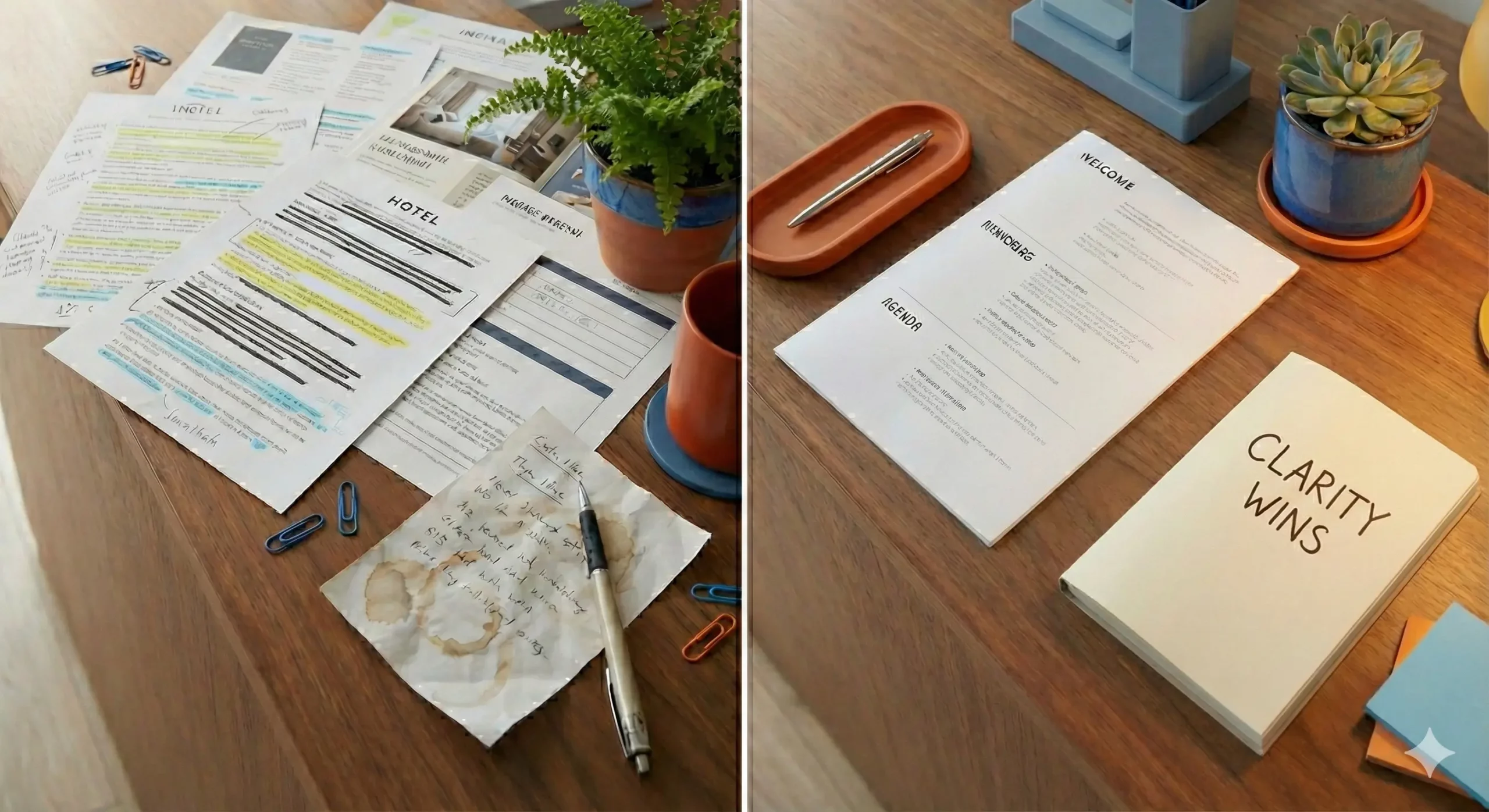

Most hotels don’t lose bookings because of their rooms. They lose bookings because their website or marketing content makes it hard for guests to understand the experience, compare options or trust what they’re reading. These mistakes are common, but the good news is they’re easy to fix once you know what to look for.
Here are the biggest content issues hotels face, and how to resolve them.
Not explaining the experience clearly
Guests don’t want vague descriptions. They want to understand what the stay actually feels like. Many hotels rely on broad statements and end up sounding the same as everyone else.
Fix this by:
- describing the atmosphere in simple terms
- giving context about the location
- explaining the service style
- stating who the stay is suited to
- using real details that help guests visualise the experience
When people understand the experience, they trust it more.
Using language that says nothing
A lot of hotel content looks polished but says almost nothing. Quick AI outputs often recycle the same tired adjectives and template phrases, which makes properties sound identical. “Luxurious,” “world class” and “unforgettable” don’t help guests choose. They dilute your message and make your brand blend in with every other hotel using the same generic copy.
Fix this by shaping a brand voice that reflects your real experience.
This is where working with a specialist matters. The Write Dynamic builds clear, grounded messaging that:
- reflects your actual strengths, not generic claims
- uses language that fits your property and service style
- highlights details guests genuinely care about
- removes empty phrases and replaces them with authentic value
- gives you a consistent tone across your website, socials and listings
AI is useful for ideas, but it cannot create a brand voice that sounds true to your property. Authentic copy takes understanding, context and a sense of your atmosphere. When your messaging feels real, guests trust it — and trust leads to bookings.
Leaving key information scattered across the site
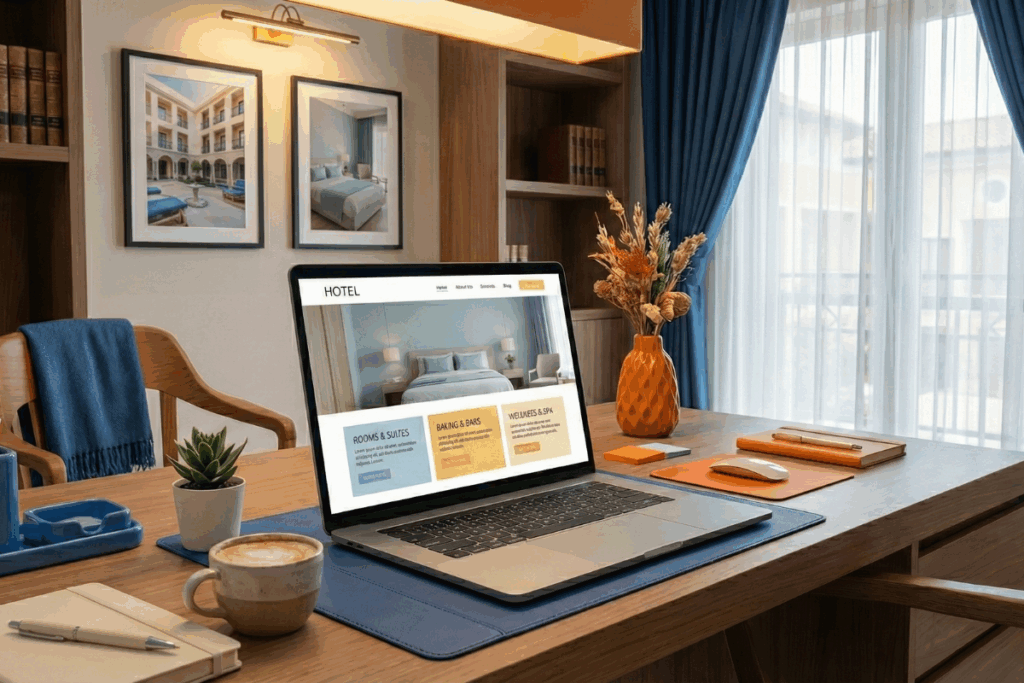
Guests won’t hunt for answers. If they can’t find simple details like parking, check-in times or what’s included, they leave the site and continue their search elsewhere.
Fix this by:
- grouping essential information clearly
- keeping your rates, inclusions and policies easy to scan
- adding practical details to room and experience pages
- reviewing your FAQs to make sure they reflect real guest questions
When information is organised well, people stay longer and compare more confidently.
Not addressing what guests value most
Guests care about convenience, comfort, location clarity and the small touches that improve a stay. Many hotel websites focus too much on room size or generic amenities and forget about the details that matter.
Fix this by:
- highlighting your strongest value points
- focusing on things that improve the stay
- clarifying what makes your service different
- adding local insight where relevant
Value is easier to communicate when you explain it simply.
Ignoring the power of accurate location context
Hotels often assume guests know the area. They rarely do. If someone has to leave your website to open Google Maps, you’re already losing momentum.
Fix this by:
- explaining where you are in relation to key spots
- adding approximate drive times
- describing what’s nearby
- clarifying if the area suits quiet stays, city breaks or family travel
Location clarity helps guests understand whether your property fits their plans.

Overloading pages with too much text
Long, dense paragraphs overwhelm readers. Guests skim. If your pages require too much effort to get through, they’ll bounce.
Fix this by:
- breaking copy into shorter, focused sections
- using simple headings
- keeping paragraphs tight
- prioritising the information guests look for first
Good structure makes your content easier to trust.
Not showing the value of booking direct
Many hotels don’t explain why guests should book directly instead of through an OTA. When this isn’t clear, guests default to the easiest option.
Fix this by:
- stating direct booking benefits clearly
- highlighting the personal value your property provides
- reinforcing trust in your secure booking process
- guiding guests to check availability in a clear, calm way
Direct bookings grow when your copy makes them feel simple and worthwhile.
Failing to update content regularly
Travel trends shift, seasons change and details evolve. Outdated content quickly erodes trust.
Fix this by:
- reviewing copy every few months
- updating policies and inclusions
- refreshing seasonal details
- checking for phrases that no longer match your offer
Small updates keep your site relevant and accurate.
Final takeaway
Most hotel content mistakes come down to clarity. When your copy is straightforward, structured and honest, guests reach decisions faster and trust your brand more. Fixing these issues strengthens your messaging and supports more confident bookings.
Want stronger content for your hotel or hospitality brand? Let’s refine your message and build clear, conversion-ready copy.