
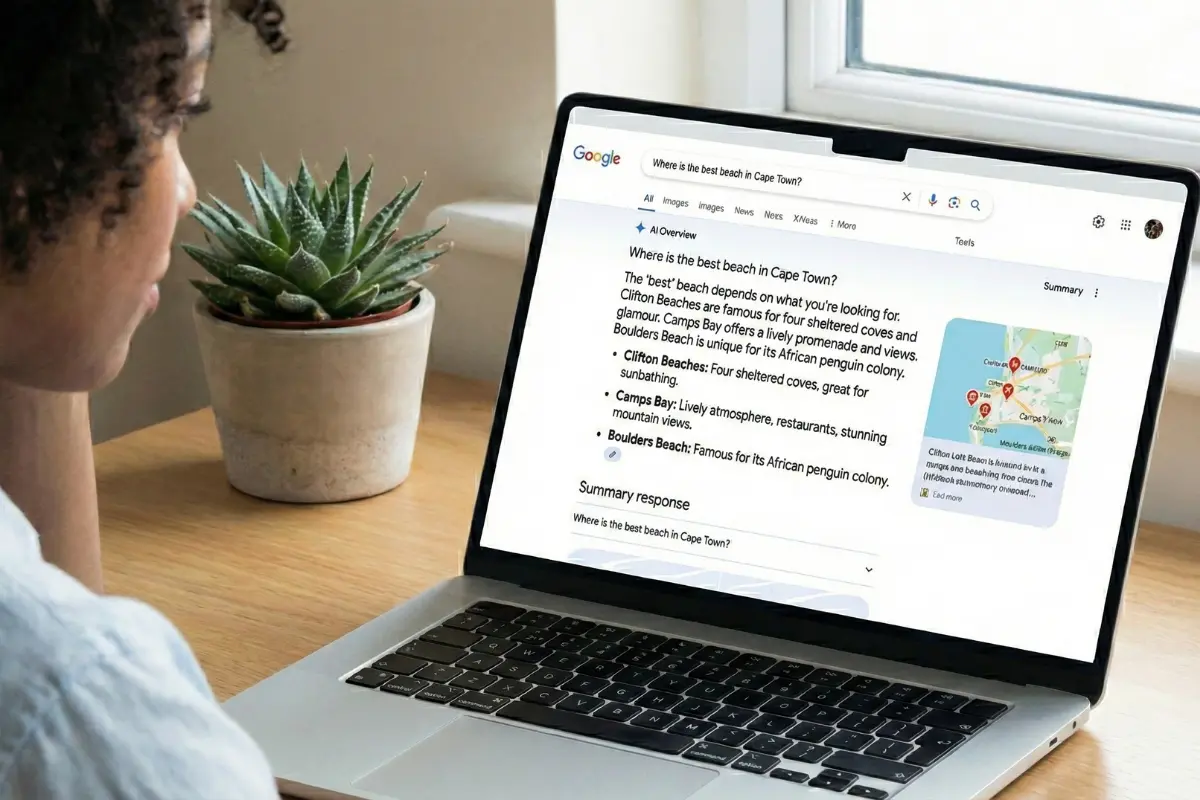

AI search is changing how people find information online. Instead of scrolling through pages of links, users ask direct questions and expect clear, usable answers. Google’s AI Overviews, ChatGPT, Gemini, and other tools pull from content that is easy to understand, well structured, and genuinely helpful.
If your content is vague, bloated, or written to sound clever rather than useful, AI tools are unlikely to surface it. The same content often performs poorly with human readers too.
AI-optimised content is not a trend or a gimmick. It is a shift back to clear communication, with structure and intent at the centre.
Let’s unpack what that actually means.

AI-optimised content is not about writing for robots
This is the biggest misconception.
AI does not want stiff, keyword-stuffed copy. It does not reward generic marketing language or pages padded out to hit a word count. AI tools are designed to interpret meaning, context, and usefulness.
Well-written content helps AI understand:
- what the page is about
- who it is for
- what question it answers
- how reliable the information is
That comes from clarity, not cleverness.
If a human can understand your content quickly, AI usually can too. If a human has to reread a paragraph to work out what you mean, AI will likely skip it.
Clarity beats creativity in AI search
Creative writing has its place. Website copy and SEO content are not that place.
AI search favours:
- plain language
- direct explanations
- clearly stated points
- logical progression
This does not mean your content should be dull. It means your ideas should be obvious.
For example, saying “We offer bespoke solutions tailored to your unique needs” tells nobody anything. Saying “We help boutique hotels improve direct bookings with clearer website copy” tells readers and AI exactly what you do.
If your main point is hidden behind vague language, it will not perform well in AI-driven search.

Search intent is the foundation of AI-optimised content
AI tools are built around intent. They try to understand what the user actually wants, not just what they typed.
Someone searching “AI-optimised content” might be asking:
- What does it mean?
- How is it different from SEO?
- Do I need to rewrite my website?
- How do I know if my content is already optimised?
- What should I do differently?
If your article only explains the term at a high level, it will struggle to rank or be referenced. Strong AI-optimised content anticipates these follow-up questions and answers them clearly.
This is where keyword research still matters. Not to stuff keywords into sentences, but to understand:
- the language people use
- the questions they ask
- the problems they are trying to solve
When your content reflects real questions and real intent, AI tools are far more likely to surface it.
SEO vs AI-Optimised Content: What’s the Difference?
Traditional SEO and AI-optimised content are closely linked, but they are not the same thing. Understanding how they differ helps you write content that performs well now and stays relevant as search behaviour continues to shift.
| ASPECT | TRADITIONAL SEO | AI-OPTIMISED CONTENT |
| Primary focus | Ranking pages in search engine results | Being selected and referenced in AI-generated answers |
| Main goal | Drive clicks from search results | Provide clear, usable answers without always needing a click |
| How users search | Short phrases and keywords | Full questions and conversational queries |
| Role of keywords | Central but often overused | Important for context, not repetition |
| Content structure | Helpful but sometimes secondary | Critical for interpretation and extraction |
| Headings | Often keyword focused | intent focused and descriptive |
| Language style | Can lean formal or marketing-heavy | Natural, direct, conversational |
| Content length | Often optimised for word count | Optimised for completeness and clarity |
| What performs best | Well-optimised pages with backlinks | Clear explanations, definitions, and context-rich sections |
| Risk if done poorly | Keyword stuffing, thin content | Vague answers, overlong explanations, filler |
| Ideal outcome | User clicks through to your site | AI uses your content as a trusted source |
How SEO and AI Work Together
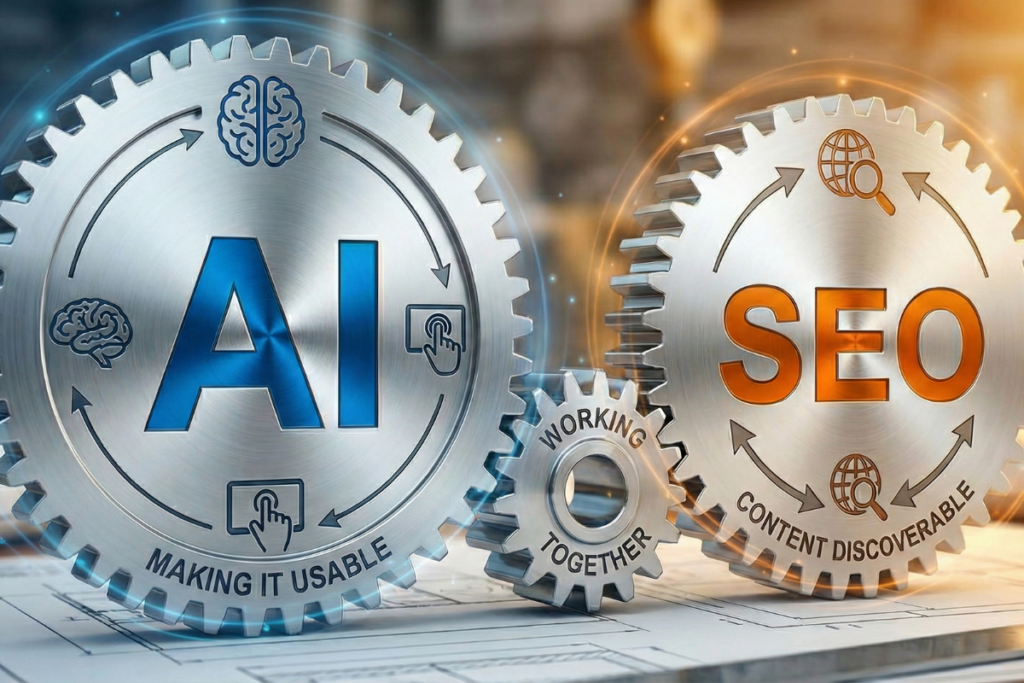
SEO and AI are not competing strategies. AI builds on the foundations that SEO has always relied on.
Strong SEO gives your content a clear topic, structure, and credibility. AI then uses that clarity to understand what your content explains and when it should be surfaced as an answer.
Think of SEO as making your content discoverable, and AI optimisation as making it usable.
When your pages have:
- clear headings
- logical structure
- well-defined topics
- internal links that provide context
search engines can index them properly, and AI tools can interpret and reference them with confidence.
Brands that treat SEO and AI as a single, connected system create content that performs well in search results today and remains visible as AI-driven discovery grows.
Structure is one of the strongest AI signals
AI needs to understand your content quickly. Structure makes that possible.
Poorly structured content usually looks like this:
- long blocks of text
- vague headings
- repeated ideas
- no clear hierarchy
Strong AI-optimised content is easy to scan.
That means:
- clear H2 and H3 headings
- one idea per paragraph
- short, focused sections
- headings that actually describe what follows
Structure helps human readers decide whether to keep reading. It also helps AI tools extract relevant information and match it to user queries.
If your content feels organised and calm to read, you are usually on the right track.
Direct answers matter more than ever
AI tools often surface content as short excerpts, summaries, or paraphrased answers. Pages that bury the answer halfway down the article tend to lose out.
This does not mean every article should start with a definition. It does mean that when a clear question exists, you should answer it clearly.
For example:
“What is AI-optimised content?”
A strong answer would be:
AI-optimised content is content written and structured so AI tools can easily understand its topic, intent, and usefulness, making it more likely to appear in AI-generated search results.
That sentence can then be expanded with context and examples. But the core answer is there, in plain language.
Natural language is not optional anymore
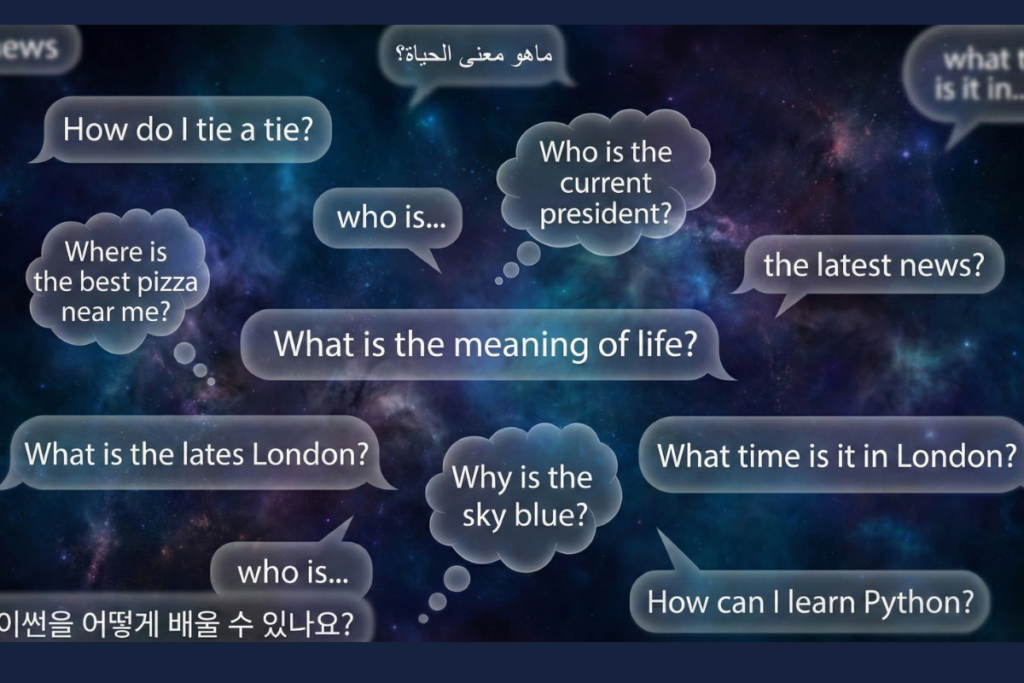
People no longer search in clipped phrases only. They ask full questions.
Instead of:
“AI content optimisation”
They ask:
“How do I optimise my content for AI search?”
Your content should reflect this shift.
This means:
- writing in complete sentences
- using question-based headings where relevant
- answering readers directly
You do not need to force questions into every heading. But your tone should feel like a conversation, not a textbook or a sales brochure.
If you can imagine someone asking you the question across a table, and your content reads like a natural answer, you are aligned with how AI tools interpret language.
Context matters as much as keywords
AI does not look at keywords in isolation. It looks at context.
That includes:
- related terms
- supporting explanations
- Examples
- internal links
- overall topical depth
A short article that barely scratches the surface may rank poorly even if it uses the right keywords. Longer, well-structured content that explains the topic properly sends a stronger signal of authority.
This is why thin content struggles in AI-driven search. It does not provide enough information to be useful.
Expanding content should never mean padding. It should mean explaining the topic properly, covering common questions, and adding clarity where readers usually get stuck.
AI-optimised content supports traditional SEO, not replaces it
AI optimisation is not separate from SEO. It builds on the same foundations.
Strong AI-optimised content still needs:
- clear page topics
- sensible keyword use
- internal links
- clean metadata
- fast-loading pages
What has changed is emphasis.
Search engines and AI tools now reward:
- helpfulness over clever wording
- clarity over creativity
- intent over volume
If your SEO strategy was built on producing large volumes of generic content, it will struggle. If it was built on answering real questions clearly, it will adapt easily.

What AI-optimised content looks like in practice
In real terms, AI-optimised content usually:
- explains one topic well instead of ten topics badly
- avoids filler phrases and marketing clichés
- answers questions directly
- uses headings that match search intent
- reads naturally out loud
- feels useful, not promotional
For service-based businesses, this often means shifting from “about us” style writing to problem-solving content. For blogs, it means going deeper instead of publishing more frequently.
Do you need to rewrite everything?
Usually, no.
Most brands do not need to start from scratch. They need to:
- tighten existing copy
- improve structure
- clarify vague sections
- remove filler
- align pages with real intent
Content audits are especially useful here. They help identify which pages already perform well and which ones are holding your site back.
Small changes often make a big difference.
Final takeaway
AI-optimised content is not about chasing algorithms or trends. It is about writing content that is clear, structured, and genuinely helpful.
When your content:
- answers real questions
- follows a logical flow
- uses plain language
- respects the reader’s time
both humans and AI tools respond better to it.
Visibility grows as a result, not because you tried to optimise for AI, but because you communicated clearly.
AI-Focused FAQs
What is AI-optimised content?
AI-optimised content is content written and structured so AI tools can easily understand its topic, intent, and usefulness. It focuses on clear explanations, logical structure, and direct answers rather than keyword repetition.
Is AI-optimised content different from SEO?
Yes, but it builds on SEO rather than replacing it. SEO helps your content get discovered, while AI optimisation helps your content get selected and referenced in AI-generated answers.
Do I need to rewrite my website for AI search?
In most cases, no. Many sites need refinement rather than a full rewrite. Improving structure, clarifying vague sections, and aligning content with real search intent often delivers better results than starting from scratch.
Does AI-optimised content still use keywords?
Yes, but keywords are used for context, not repetition. AI tools look at how terms are explained and supported throughout the page, not how often they appear.
Why does structure matter so much for AI search?
Structure helps AI tools interpret content quickly. Clear headings, focused sections, and short paragraphs make it easier for AI to extract relevant information and match it to user questions.
Does longer content perform better in AI search?
Not automatically. Content performs better when it fully answers a topic without filler. Length helps only when it adds clarity, depth, and context.
How do I know if my content is AI-optimised?
If your content clearly answers real questions, follows a logical flow, avoids vague language, and feels easy to scan and understand, it is likely aligned with AI-driven search.

Bridgette is a Cape Town–based content strategist and writer specialising in travel, hospitality, wellness, and lifestyle brands. She works with boutique hotels, lodges, and creative businesses to create clear, search-ready content that supports real business goals. Her focus is practical SEO, strong brand voice, and content built for how people and AI now search.